
Brands We Serve

logo-apple

logo-nasa
logo-aligned-energy

logo-los-alamos

logo1

Toyota-logo

logo6

logo8

logo2

logo9

logo4

logo10

logo5

IT23-IMBA2-030416-company-1

Logo_for_Orbital_ATK

VW-Logo_Tagless_Shawblue_H-1
Standard Humidification Introduces the Contaminants Your Lab Cannot Afford
Laboratories, clean rooms, and controlled research chambers operate under strict atmospheric requirements. Tight humidity tolerances support test validity, protect sensitive instrumentation, and satisfy regulatory and ISO classification requirements. Achieving those tolerances is the baseline. What most humidification systems fail to account for is what they introduce into the environment in the process.
Tap water and filtered water contain dissolved minerals, trace organic compounds, and biological content. Inside an ultrasonic humidifier, the water is atomized and discharged directly into the air. Minerals become airborne particulate: white dust that settles on surfaces, samples, and precision equipment. Bacteria and biological matter become aerosolized and recirculated through the controlled space. In a research environment, that is not a maintenance inconvenience. It is a contamination event that compromises results, damages equipment, and in regulated environments, can trigger compliance failures.
Ultrapure Water In. Clean, Controlled Humidity Out.
UltraPure integrates a six-stage water purification process with industrial ultrasonic humidification into a system designed specifically for critical environments. Feedwater is treated with pretreatment, two-pass reverse osmosis, mixed-bed deionization, and UV sterilization before it reaches the humidifier. What is atomized into your lab environment is ultrapure water: no minerals, no organics above 50 ppb TOC, no viable biological content.
No White Dust. No Particulate in the Controlled Space.
UltraPure systems produce water at near-zero TDS before it reaches the transducer. When atomized ultrasonically, there is nothing mineral in suspension to become airborne. White dust formation is eliminated at the source, not managed after the fact.
Bacteria and Biological Contamination Eliminated at the Water Stage.
Every UltraPure system includes UV sterilization at 254nm and 185nm wavelengths. The 254nm wavelength targets biological control, inactivating bacteria and viruses in the water before humidification. The 185nm wavelength targets organic compounds, reducing TOC below 50 ppb. What enters the air is sterile, ultrapure moisture.
Static Controlled. Instrumentation Protected.
Below adequate RH, electrostatic discharge events damage sensitive electronics, corrupts stored samples, and disrupts precision instrumentation. Ultrasonic humidification with RODI-purified water maintains the RH setpoint required to suppress static without introducing the contamination risk that makes conventional humidification problematic in lab environments.
Six Stages from Feed Water to Compliant Lab Air
Step 1: Pretreatment
Incoming feed water passes through pretreatment cartridges that remove hardness and chlorine from the municipal supply. This protects downstream membrane performance and extends system service life.
Step 2: Two-Pass RO Array
Water passes through a two-pass reverse osmosis array that removes 99.5% of organic, inorganic, and metallic contaminants. This is the primary rejection stage for dissolved solids, heavy metals, and trace compounds.
Step 3: Mixed-Bed Deionization
Primary and polish mixed-bed deionization reduces conductivity to 18.2 megohms, producing Type 1 ultrapure water (UPW) on demand. Water is continuously recirculated through the polish loop to maintain purity between draw cycles.
Step 4: UV Sterilization (254nm / 185nm)
Dual-wavelength UV treatment addresses biological and organic content. 254nm UV inactivates bacteria and viruses. 185nm UV degrades organic compounds, driving TOC below 50 ppb. Water reaching the humidifier is sterile and organically clean.
Step 5: Ultrasonic Atomization
Ultrapure water feeds directly to the industrial ultrasonic humidifier. High-frequency transducers convert water to a fine, clean mist at ambient temperature: no heat addition, no steam, no thermal load on the controlled environment.
Step 6: Proportional Humidity Control
Variable speed fans and proportional control with dynamic proportional adjustment maintain RH setpoints within tight tolerances. The system responds to load changes and ambient shifts in real time, sustaining the atmospheric conditions required for valid test results and regulatory compliance.
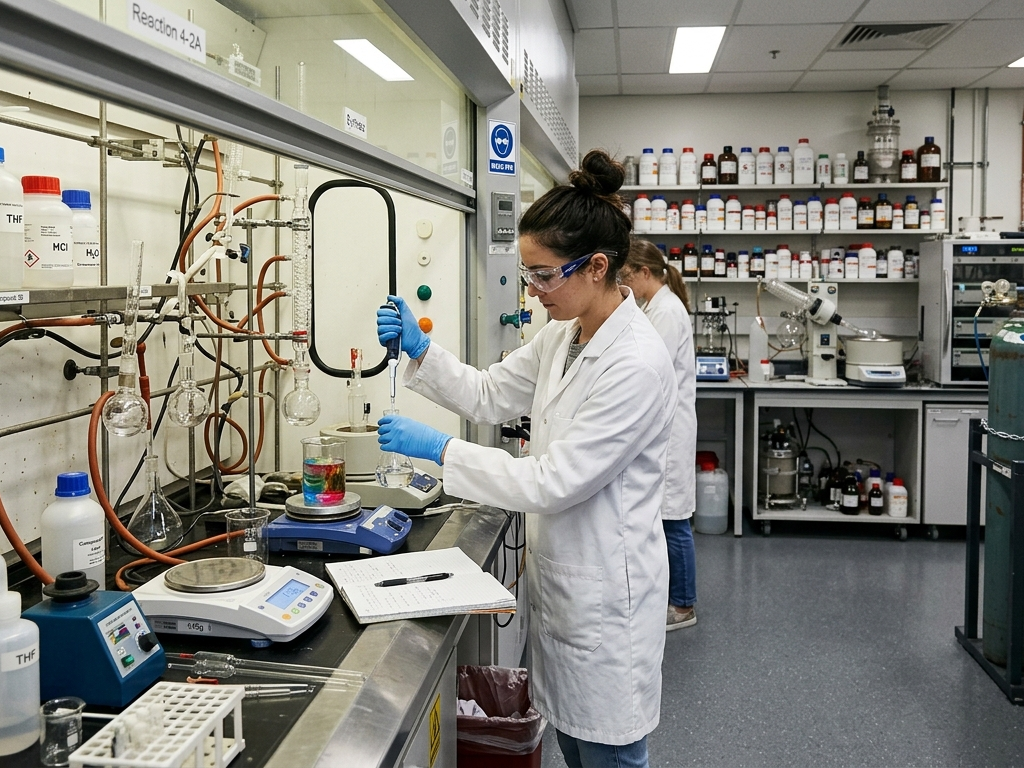
Type 1 and Type 2 Ultrapure Water Systems for Labs, Clean Rooms, and Research Chambers
UltraPure water systems produce 18.2-megohm water on demand, with TOC below 50 ppb and biological content controlled via UV sterilization. Systems include a makeup side loop for pretreatment and primary purification and a polish side loop for continuous recirculation to setpoint purity. Humidifier capacity is sized to space volume, target RH setpoint, and ISO classification requirements.
What you get:
- Six-stage water purification: pretreatment, two-pass RO, primary deionization, polish deionization, dual-wavelength UV (254nm / 185nm)
- Type 1 and Type 2 UPW output: 18.2 megohm, less than 50 ppb TOC
- Continuous recirculation loop to maintain purity between draw cycles
- Industrial ultrasonic humidifiers with proportional and dynamic proportional control
- No white dust, no mineral particulate, no aerosolized biological content
- Patented cabinet design: compact, wall-mounted, field-serviceable (US D780,884 S / US D780,885 S)
- Replacement filters cataloged by system model
- Made in the USA
Why Ultrasonic Humidification Is the Right Specification for Controlled Laboratory Environments
Steam humidification generates heat, which conflicts with temperature-controlled lab and clean room environments. It also requires continuous energy input, adds boiler maintenance to the facility schedule, and demands descaling due to mineral accumulation in the steam generator. In a regulated environment, unscheduled maintenance events pose compliance and operational problems.
Evaporative humidification depends on airflow patterns, responds slowly to setpoint deviation, and cannot maintain the RH tolerances required for ISO-classified clean rooms or GMP-regulated lab spaces.
Ultrasonic humidification operates at ambient temperature, responds rapidly to control signals, and holds tight tolerances through proportional control. When fed ultrapure water, it releases nothing into the environment other than moisture. No minerals. No heat. No biological content. No particulate. That combination of performance and cleanliness is why ultrasonic humidification with ultrapure water is the appropriate specification for critical laboratory environments.
Common Questions from Laboratory and Clean Room Engineers
Q: What purity level does the system produce?
A: Type 1 ultrapure water at 18.2 megohm resistivity, with TOC below 50 ppb and biological content controlled through dual-wavelength UV sterilization. Type 2 systems are also available depending on application requirements.
Q: How does the system handle biological contamination risk?
A: UV sterilization at 254nm inactivates bacteria and viruses in the water prior to atomization. 185nm UV simultaneously degrades organic compounds. Water reaching the ultrasonic transducer is sterile. What enters the lab environment is biologically clean moisture.
Q: Does the system add heat to the controlled environment?
A: No. Ultrasonic atomization operates at ambient temperature through high-frequency transduction. No heat is generated or introduced into the space, which makes it compatible with temperature-controlled labs and ISO-classified clean rooms.
Q: How tightly can RH be held?
A: Proportional control with dynamic proportional adjustment modulates humidifier output in real time based on sensor feedback. The system responds to load changes and ambient shifts without the lag or overshoot that characterizes on/off control. Tight tolerances required for specific test protocols or ISO classification are maintainable.
Q: What does the maintenance schedule look like in a regulated environment?
A: Filter replacement on a scheduled interval (sets are cataloged by system model, no cross-referencing required), UV lamp replacement per manufacturer interval, and annual transducer inspection. No descaling. No boiler maintenance. The schedule is predictable and documentable for regulated environments.
Q: Can the system serve multiple rooms or zones?
A: Yes. Systems are specifiable for single-room laboratories or distributed across multiple zones, each with individual RH control. Contact us with your facility layout and ISO or GMP requirements and we will size accordingly.
Ready to Specify the System for Your Facility?
Send us your facility type, room classification, target RH setpoint, and water source. We will put together a system recommendation with sizing and lead time. Call (800) 729-5192, or submit your project details below.